The $1 Trillion No One Is Counting
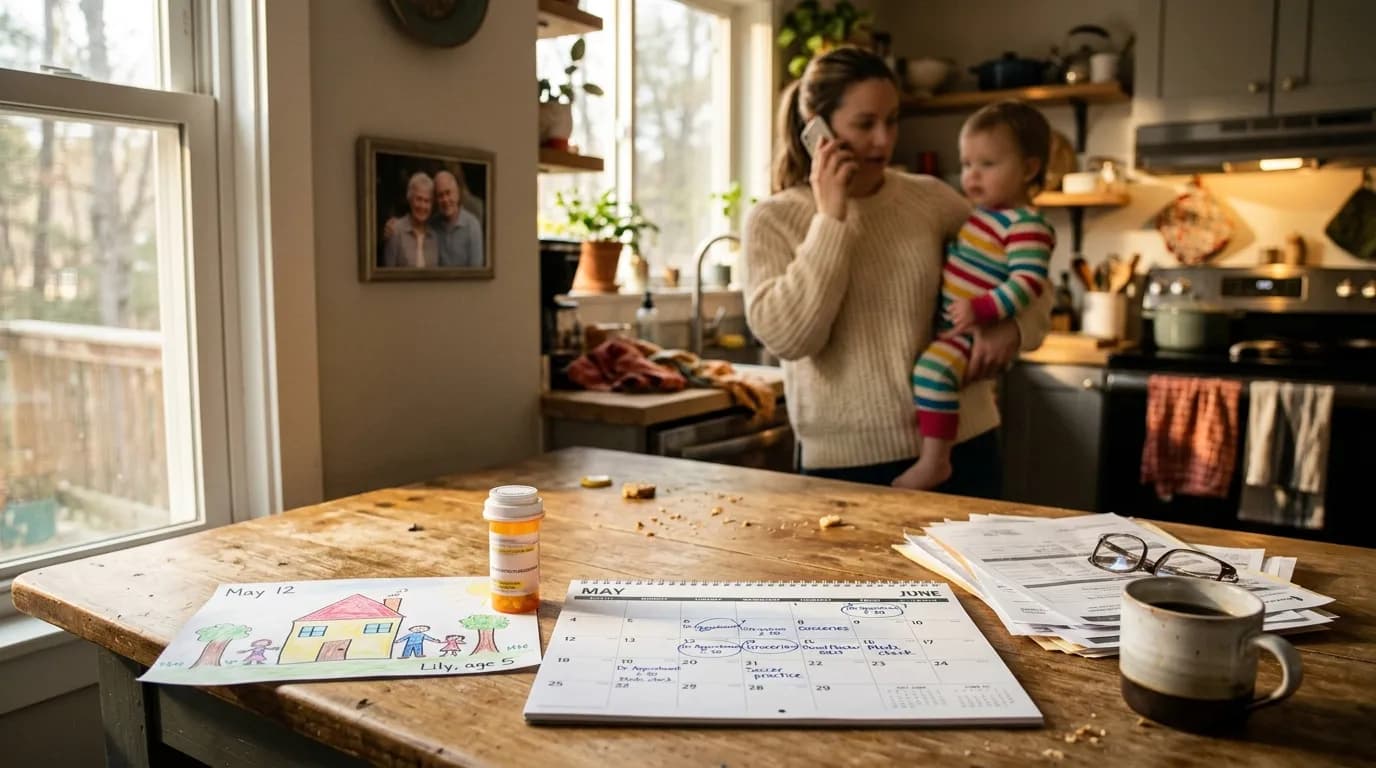
You wake up at 6 AM to help someone bathe. You drive to three appointments, manage a pharmacy refill, talk a sibling off a ledge, research a specialist, and handle a billing dispute with an insurance company — all before dinner. Then you do it again tomorrow. Nobody pays you. Nobody even tracks it. And yet, according to new data, what you're doing is worth more than the entire GDP of many nations.
Caregiving Is Economic Work — We Just Refuse to Call It That
A major 2026 report from AARP's Public Policy Institute put a number on something caregivers have known in their bones for years: the unpaid labor of family caregivers in the United States exceeded $1 trillion in economic value in 2024.
That's not a typo.
Fifty-nine million family caregivers provided an estimated 49.5 billion hours of care. At an average of $20.41 per hour — the going rate for comparable professional care services — that's $1.01 trillion worth of labor absorbed entirely by families. Voluntarily. Quietly. Without invoice or acknowledgment.
To put it in perspective: that's more than the U.S. spent on Medicaid in a year.
The Cost Has Skyrocketed — Just Not for the People Doing the Work
Between 2019 and 2024, the cost of long-term care services surged by 50%. Home health aides, adult day programs, assisted living facilities — all of it got dramatically more expensive. But here's the thing: the cost of family caregiving didn't rise in anyone's ledger. Because it was never on the ledger to begin with.
What this means in practice: as professional care became unaffordable for more families, more of the burden quietly shifted onto unpaid relatives. The gap between "what care costs" and "what families can afford" is being filled by people like you — working without wages, without benefits, without time off.
The report noted that average caregiver hours per week have also increased, meaning families aren't just stepping in for short stretches anymore. They're providing care that used to require professional staff, for years at a time.
Why This Number Matters — Especially for You
Recognizing the economic weight of caregiving isn't about patting yourself on the back (though, seriously, you deserve that). It matters because:
It validates what you already know. When someone implies you're "just helping out a family member," this number tells the other story. You are doing the work of an entire healthcare workforce. The fact that love motivates it doesn't make it invisible.
It has policy implications. Several proposed federal bills have sought to recognize caregivers through tax credits, retirement contributions, and expanded respite benefits — precisely because of data like this. The argument that caregivers are "choosing" something personal gets harder to make when the economic contribution is quantified in the trillions.
It changes the conversation about your own financial future. Every hour you spend caregiving is typically an hour not spent earning, saving, or advancing your career. The downstream financial damage — reduced retirement savings, gaps in Social Security earnings, career interruptions — is real. If you're not planning for that, now is the time.
The Work You're Already Doing Is Real Work
One of the crueler aspects of family caregiving is how thoroughly it erases itself. The tasks pile up — medications, appointments, finances, communications, coordination — and the sheer volume of it all becomes normalized. You stop seeing it as extraordinary because it's simply your day.
But when you step back and look at what you're actually managing — medical decisions, financial oversight, logistics, emotional labor, safety monitoring — it's the equivalent of running a small healthcare operation. The people who get paid to do this have job titles. You just have a parent or a spouse.
The more you can externalize and organize the pieces — tracking medications, managing bills, keeping emergency information accessible, coordinating with others involved in care — the less it lives entirely in your head. Not because it isn't real work, but precisely because it is.
What Would It Mean to Be Seen?
A study like this one doesn't change your daily reality. You'll still get up tomorrow and do the work. But maybe what it offers is something small and necessary: the permission to stop treating what you do as less-than.
You are not just helping out. You are not just stepping up because no one else will. You are providing skilled, sustained, economically significant labor — and doing it out of love doesn't diminish that.
It might, in fact, be the most remarkable thing about it.
Managing the volume of caregiving — appointments, finances, medications, emergency contacts, care notes — is a lot to carry alone. The more you can organize and share, the lighter that load gets.
Managing care for an aging parent?
TendTo helps families coordinate medications, bills, appointments, and documents in one shared dashboard.
Start Free