Caught in the Middle: How Sandwich Generation Caregivers Survive
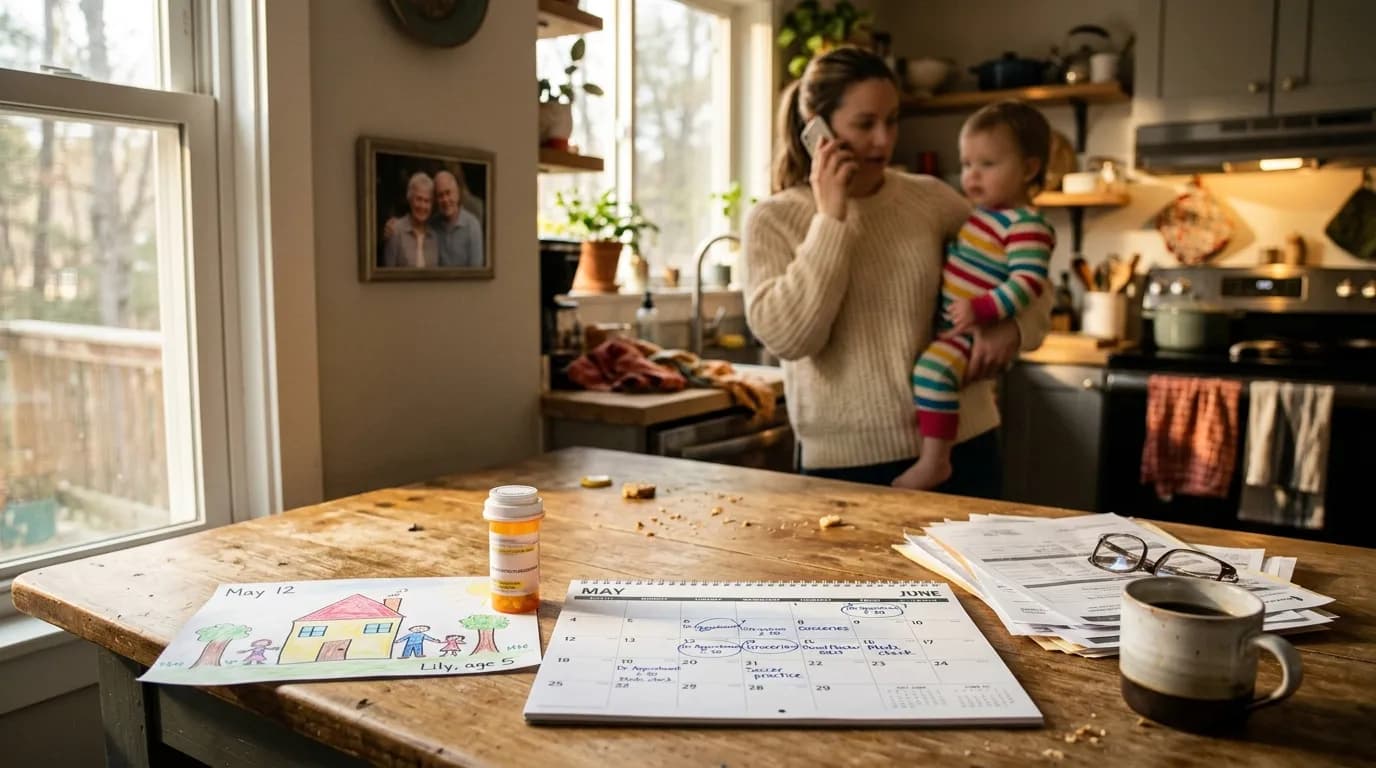
Your daughter has a school play on Thursday. Your father has a cardiology appointment on Thursday. Your boss needs the quarterly report by Friday. Your mother-in-law is calling again because she can't figure out her new phone. It's Tuesday, and you're already drowning.
Welcome to the sandwich generation — the nearly one in three caregivers who are simultaneously raising children and caring for aging parents. If you feel like there's never enough of you to go around, that's because there literally isn't.
A Growing Reality
The sandwich generation isn't new, but it's growing fast. According to AARP's 2025 caregiving report, 29% of all family caregivers are now sandwiched between generations. Among those under 50, that number jumps to 47%.
The math is simple and cruel: people are having children later, and their parents are living longer. The result is a collision of dependency that lands squarely on the generation in between — often during their peak earning years, when they can least afford the disruption.
The Invisible Load
What makes sandwich caregiving uniquely exhausting isn't just the hours. It's the context-switching. In a single day you might:
- Help your teenager with college applications in the morning
- Spend your lunch break on hold with your dad's insurance company
- Leave work early for your mom's physical therapy appointment
- Come home to homework battles, dinner, and bedtime routines
- Then log back on to finish the work you missed
Each of these tasks requires a completely different emotional register. You're cheerleading one minute, advocating the next, managing the next. Your brain never gets to settle.
And then there's the invisible load that never appears on any schedule: remembering the prescription refill, noticing that Dad seems more confused this week, sensing that your twelve-year-old is acting out because they feel neglected. That ambient vigilance — the feeling that you need to be monitoring everything, everywhere, all the time — is what turns exhaustion into something deeper.
Your Kids Are Watching
One of the hardest parts of sandwich caregiving is the guilt of shortchanging your children. You missed the game. You were distracted during dinner. You snapped at them because you were already running on empty before they asked for help with math.
Research from the American Heart Association shows that sandwich caregivers struggle to spend quality time with their own kids — and kids notice. They may not understand why Mom or Dad is always stressed, but they absorb the tension.
The flip side? Children who grow up around caregiving often develop profound empathy, resilience, and a realistic understanding of aging and family responsibility. You're not ruining them. But you do need to give them age-appropriate context: "Grandpa needs extra help right now, and sometimes that means I'm tired. It's not your fault, and I'm not going anywhere."
What Actually Helps
There's no magic solution to being pulled in two directions. But there are strategies that reduce the chaos:
Consolidate information. The single biggest time-sink for sandwich caregivers is having critical information scattered everywhere — your parent's medications in one place, insurance details in another, your kid's school schedule on the fridge, your own calendar somewhere else. Getting everything into one accessible, shared system saves hours every week and prevents the 11 PM panic of "wait, when is that appointment?"
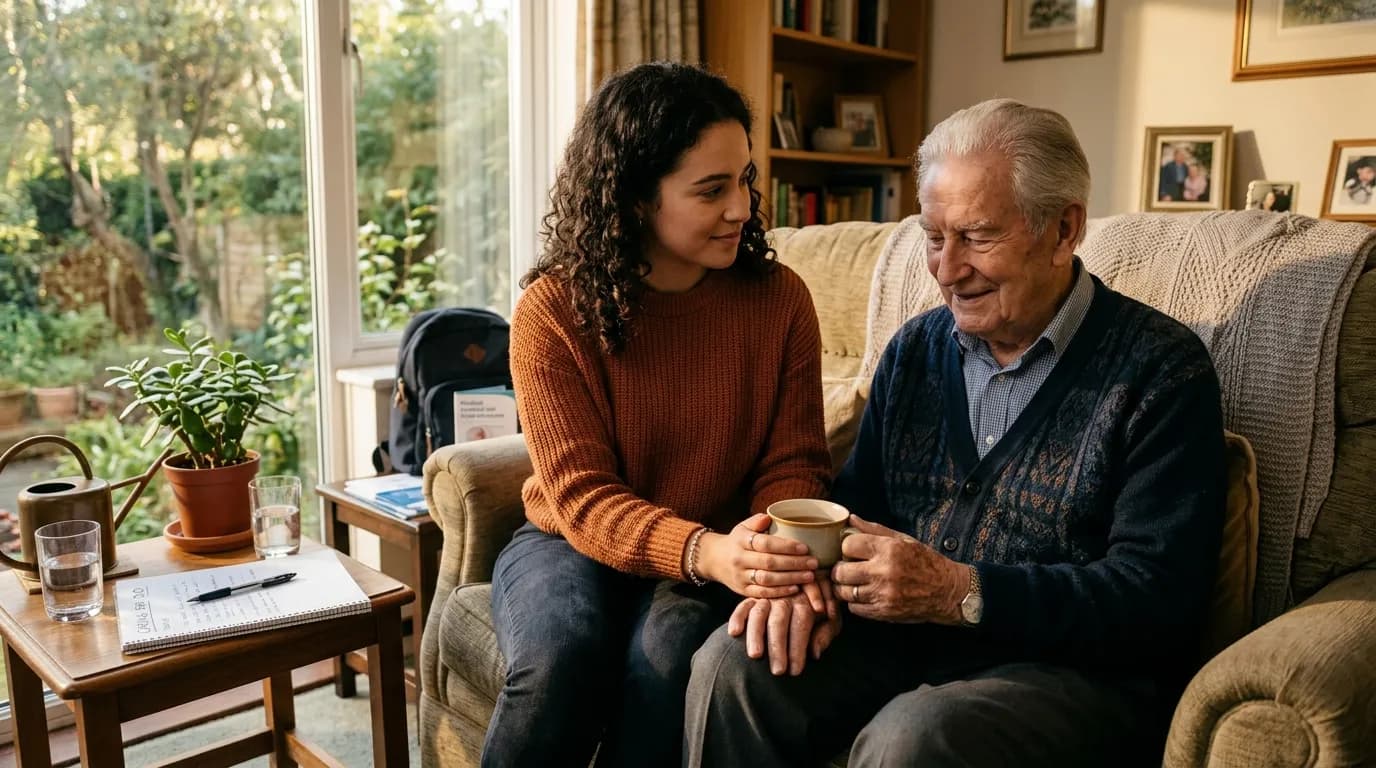
Delegate ruthlessly. You cannot do everything, so stop trying. Assign specific tasks to siblings, your partner, older children, or hired help. The key is making those tasks truly owned — not "could you help with..." but "you are responsible for Dad's Thursday rides, full stop."
Protect one thing per day. You can't protect all your time, but you can protect one thing. Maybe it's dinner with your kids. Maybe it's a 30-minute walk. Maybe it's just going to bed before midnight. Pick one non-negotiable daily anchor and defend it.
Lower your standards. The house doesn't need to be spotless. Dinner can be cereal. Your parent's laundry can wait a day. Perfection is the enemy of survival right now, and survival is the only metric that matters.
Talk to your employer. If you haven't disclosed your caregiving situation at work, consider it. Forty-two percent of working caregivers report career impacts — but many never explore the flexibility options available to them. You might be surprised what's possible when you frame the conversation around sustained performance rather than personal hardship.
You're Not Failing Both Sides
The defining emotion of sandwich caregiving is the persistent feeling that you're failing everyone — not quite present enough for your kids, not quite attentive enough for your parents, not quite committed enough at work.
You're not failing. You're doing an impossible job with finite resources. The fact that all sides are still functioning — imperfectly, messily, but functioning — is evidence of how much you're holding together, not how much you're letting slip.
Give yourself the same grace you'd give a friend in your situation. And when you can, share the weight. Nobody is meant to carry two generations alone.
Managing care for an aging parent?
TendTo helps families coordinate medications, bills, appointments, and documents in one shared dashboard.
Start Free