Fall-Proofing Your Parent's Home
One in four Americans over 65 falls each year. For caregivers, that statistic isn't abstract — it's the phone call you dread at 2 AM.
The good news? Most falls are preventable with surprisingly simple home modifications. Here's how to turn your parent's home from a hazard zone into a safe place to age.
Why Falls Are Such a Big Deal
A fall isn't just a bruise. For older adults, a single fall can trigger a cascade: a broken hip leads to surgery, surgery leads to immobility, immobility leads to pneumonia or blood clots. Nearly 95% of hip fractures are caused by falls, and the recovery often marks a permanent shift in independence.
Beyond the physical damage, falls create fear. An older adult who's fallen once often restricts their own movement — avoiding stairs, skipping walks, staying in bed longer — which paradoxically increases their fall risk through muscle loss and deconditioning.
The Room-by-Room Walkthrough
Grab a notepad and walk through your parent's home with fresh eyes. You're looking for things they've stopped noticing.
Bathroom
The bathroom is fall ground zero. Wet floors, hard surfaces, and the physical demands of getting in and out of a tub make it the most dangerous room in the house.
- Install grab bars near the toilet and inside the shower or tub. (Towel bars are not grab bars — they will pull out of the wall under weight.)
- Add a shower chair or bench so they can sit while bathing.
- Use non-slip mats both inside the tub and on the bathroom floor.
- Raise the toilet seat if getting up and down is a struggle. Raised seats with armrests are inexpensive and easy to install.
Kitchen
- Move frequently used items to counter height. No one should be climbing on step stools to reach cereal bowls.
- Wipe up spills immediately and consider replacing slick flooring with textured options.
- Ensure lighting is bright — older eyes need two to three times more light than younger ones.
Bedroom
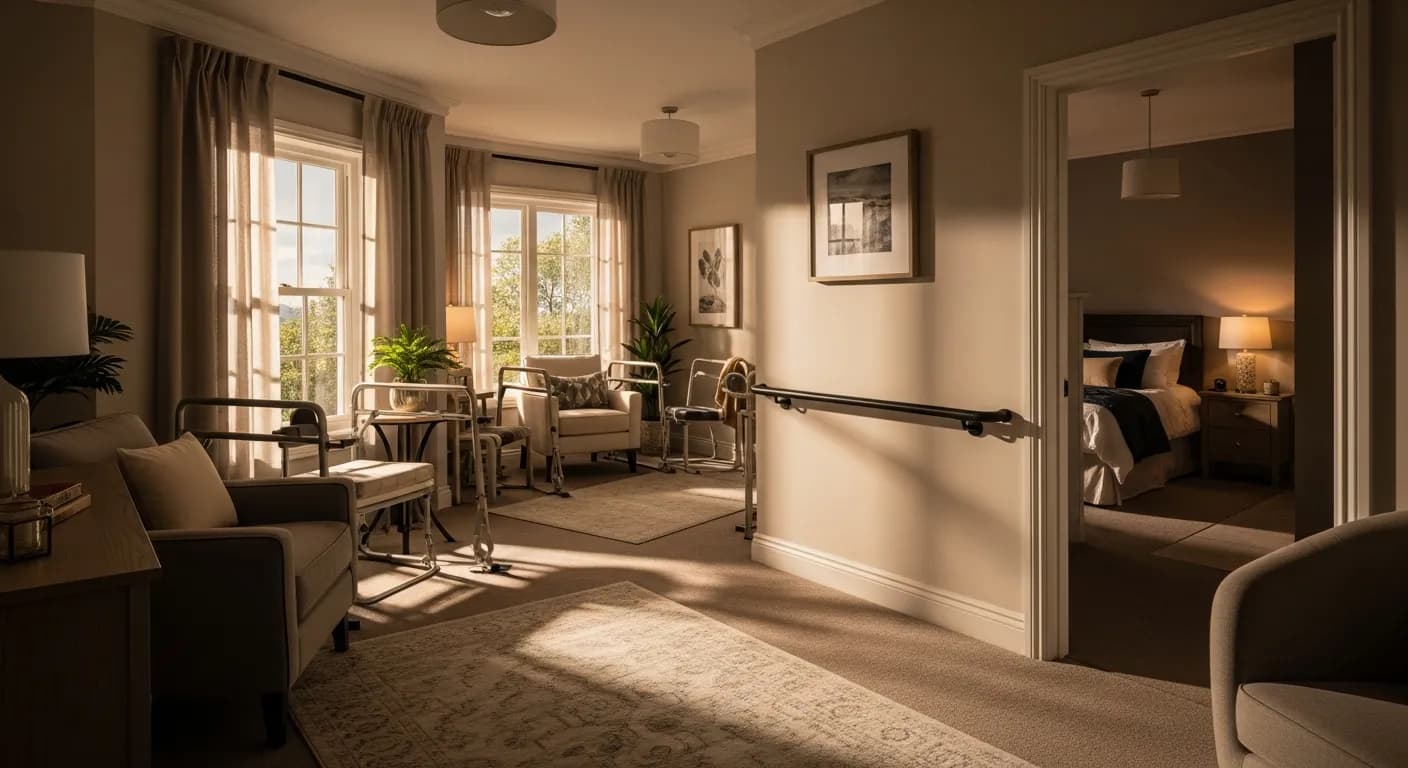
- Clear the path from bed to bathroom. This is the most common midnight fall route. Night lights along the way are essential.
- Place a sturdy chair in the bedroom for sitting while dressing.
- Make sure the bed height is right — too low makes standing difficult; too high creates a step-down hazard.
Stairs and Hallways
- Install handrails on both sides of every staircase.
- Remove throw rugs or secure them with double-sided tape. Loose rugs are responsible for a staggering number of falls.
- Improve lighting in hallways and at the top and bottom of stairs. Motion-activated lights are a small investment with huge returns.
Entryways
- Repair uneven walkways and steps outside the home.
- Add a ramp if steps are becoming difficult, even if your parent isn't using a wheelchair yet.
- Keep paths clear of garden hoses, newspapers, and seasonal clutter.
The Modifications You Can't See
Physical changes to the home are important, but some of the best fall prevention is about systems:
- Medication review: Many falls in older adults are caused by medications that cause dizziness, drowsiness, or blood pressure drops. Ask their doctor to review all prescriptions — including over-the-counter drugs — for fall-risk side effects.
- Vision checks: Outdated prescriptions, untreated cataracts, or bifocals on stairs can all contribute. Annual eye exams matter more than ever.
- Footwear: Those cozy socks with no grip? Replace them with non-slip slippers. Bare feet on hardwood are just as risky.
- Emergency information access: If a fall does happen, first responders need to know about medications, allergies, and conditions. Having that information organized and accessible — on the refrigerator, in a phone, anywhere someone can find it quickly — can make a critical difference.
Having the Conversation
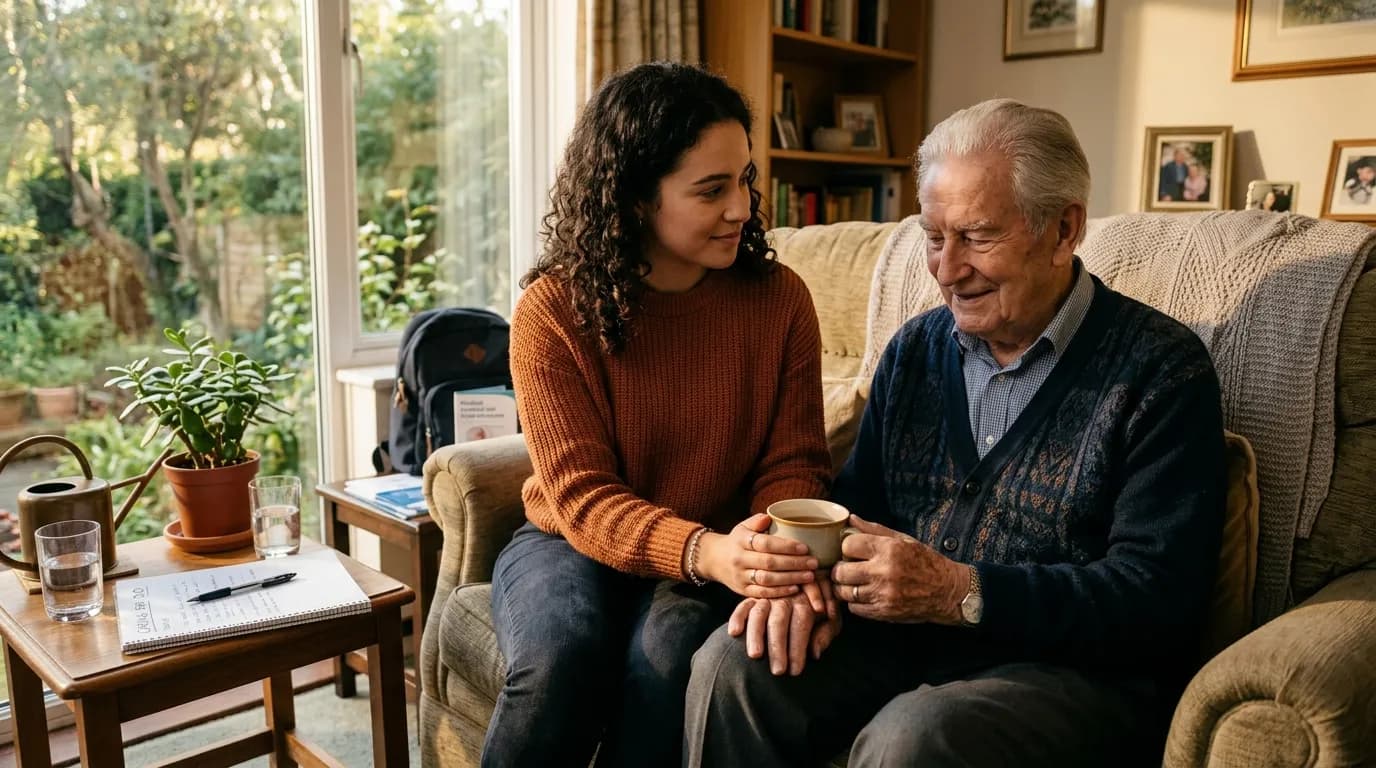
Here's the tricky part: your parent may not want you rearranging their house. Independence is identity for many older adults, and suggestions about grab bars can feel like being told they're old.
Frame it as partnership, not takeover. "I want you to stay here as long as possible — let's make this house work for that" lands better than "you're going to fall."
Start with the changes they're most likely to accept, and let them be part of the decisions. A parent who chooses their own shower bench is more likely to use it than one who finds it installed without asking.
A Safe Home Is a Gift
You can't prevent every fall. But you can dramatically reduce the risk with a weekend of simple modifications and a thoughtful conversation. For caregivers, every grab bar installed and every throw rug removed is a little more peace of mind — and a lot more time for your parent to stay safely in the home they love.
Managing care for an aging parent?
TendTo helps families coordinate medications, bills, appointments, and documents in one shared dashboard.
Start Free