Managing Your Parent's Care From Miles Away
Your mom is 800 miles away. Her doctor called. Do you know where her medication list is?
Long-distance caregiving is one of the fastest-growing challenges in elder care, and it's also one of the loneliest. According to the National Alliance for Caregiving, roughly 11% of family caregivers live more than an hour away from the person they care for. And unlike local caregivers who can stop by and check in, long-distance caregivers are constantly operating with incomplete information, delayed responses, and a nagging fear that something is going wrong and they won't find out until it's too late.
Caregiving expert Pamela D. Wilson, one of YouTube's most-watched voices on elder care, recently released a video titled "When Parents Live Far Away" that struck a nerve with viewers. The comments told the real story: adult children torn between their own lives and a parent who needs more help than a weekly phone call can provide.
If this is you — managing a parent's care from a different city or state — this post is your playbook.
The Unique Torture of Caring From Afar
Local caregivers face burnout from doing too much. Long-distance caregivers face a different kind of stress: the anxiety of not knowing enough. You can't see whether Mom ate today. You can't check if Dad took his medication. You can't tell from a phone call whether the house is safe or whether something subtle has changed.
On Reddit's r/AgingParents, one user wrote a long, emotional post about "living far away from aging parents" and the guilt that comes with it: "I have seen heartbreaking stories in this group and seen how children are leading their own lives far away, having guilt of not being there when needed — and some having regret when that time has passed."
Daughterhood's blog captures this perfectly in a piece called "Caregiving During the Holidays is Not a Hallmark Movie," describing the experience of being 800 miles from family while a parent's health declines: "All around me happy families seemed to be strolling along, multiple generations together."
The distance doesn't just create logistical problems. It creates emotional ones — a persistent low-grade grief mixed with helplessness that nobody around you quite understands.
Information Chaos Is the Real Enemy
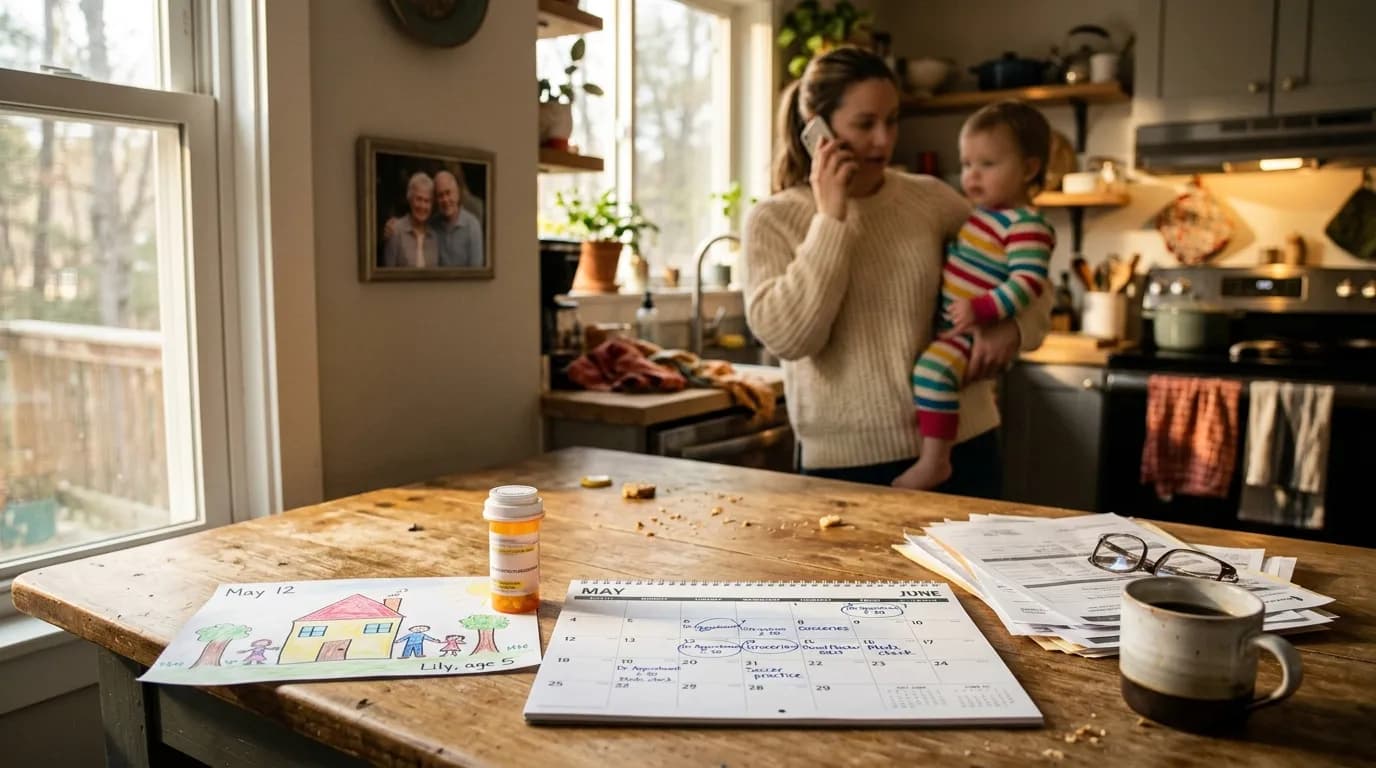
Here's what most long-distance caregivers discover quickly: the hardest part isn't the distance itself. It's the information gaps.
- Which pharmacy does Dad use?
- When is Mom's next cardiology appointment?
- What's her Medicare supplement plan number?
- Did someone pay the property tax bill?
- What medications is she on, and have any changed since last month?
- Who's her primary care doctor's office, and what's the phone number?
When you're local, you absorb this information passively — through conversations, through being present, through the mail on the counter. From a distance, every single piece of information has to be actively sought, captured, and stored somewhere you can find it again.
The Caregiver Action Network recommends using technology to bridge this gap: "A smartphone app that keeps track of appointments, shares important contact numbers with family members, reduces the time spent on phone calls, emails, and texts to stay organized." The Family Caregiver Alliance echoes this: digital tools for personal health record tracking, medication management, and care coordination are no longer nice-to-have. They're essential.
Yet most families are still coordinating care through group texts and scattered notes. A recent Reddit thread in r/AskUK captured this perfectly: "My brother, sister and I care for an older relative together. There are so many details to keep up with. Does anyone know of any apps? Details get lost in constant WhatsApp messages between us."
The answer to information chaos isn't more texts or more spreadsheets. It's a single shared space where every critical detail — medications, providers, appointments, bills, documents, emergency contacts — lives in one place that everyone in the family can access from anywhere.
Building Your Long-Distance Care System
Whether you're 100 miles away or 1,000, these principles help you stay informed and effective without losing your mind.
Create a complete care profile. Document everything about your parent's health and daily life: every medication (dose, frequency, prescribing doctor), every provider (name, specialty, phone, address), every insurance plan (ID numbers, what's covered), and every recurring bill. This profile should be accessible to every family member involved in care — and to a stranger in an emergency.
Establish a communication rhythm. Weekly family check-ins (even 15 minutes on a video call) prevent information from slipping through cracks. But don't rely on calls alone. A shared dashboard where updates are logged — "Dad's blood pressure was high at Thursday's appointment, doctor adjusted medication" — means everyone stays current without playing phone tag.
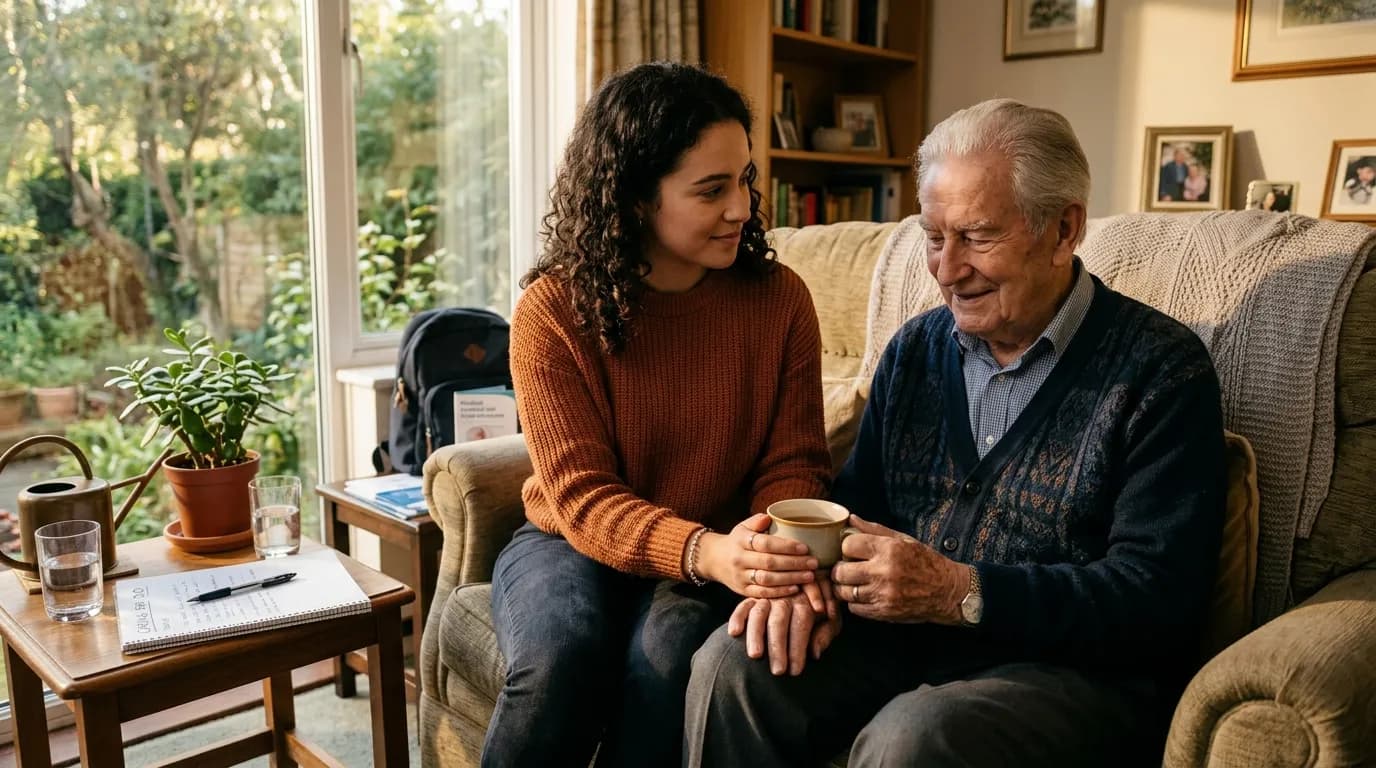
Identify local allies. You need people on the ground. A trusted neighbor who checks in. A local friend who can swing by. Your parent's faith community. The local Area Agency on Aging, which can connect you with meal delivery, transportation, and wellness checks. Building this network early — before a crisis — is critical.
Set up financial autopilot. One of the biggest risks for long-distance caregivers is missed bills. Utilities getting shut off, insurance lapsing, prescriptions not being refilled — all because a payment fell through the cracks. Moving everything to autopay and tracking it through a shared bill management system eliminates the most dangerous failure points.
Prepare for the emergency you hope never comes. What happens if your parent falls and you're not reachable? What if they're taken to an ER and can't communicate their medical history? An emergency profile — accessible on a phone or shareable with first responders — that includes medications, allergies, conditions, doctors, and emergency contacts can literally save a life.
Technology Is Finally Catching Up
For years, the technology options for family caregivers were frustrating: medication apps that didn't track anything else, calendar tools that weren't built for care coordination, and generic note-taking apps that became graveyards of unorganized information.
That's changing. The Family Caregiver Alliance now maintains an entire section on digital technology for caregivers, noting tools for health record tracking, medication management, and group coordination. Caring Senior Service published an updated guide to caregiver apps for 2026, and care coordination platforms are emerging that combine bills, medications, appointments, documents, and family communication into a single hub.
The key insight from every expert and every caregiver community is the same: fragmented tools create fragmented care. When your medication tracker is separate from your appointment calendar, which is separate from your bill tracker, which is separate from your family group chat — things slip through. The caregivers who manage best from a distance are the ones who consolidate everything into one system that everyone can see and update.
You Can't Be There Every Day — But You Can Be Prepared
Long-distance caregiving will always involve some measure of uncertainty and guilt. You can't eliminate the distance. But you can eliminate the chaos.
The caregivers who navigate this best aren't the ones closest to their parents. They're the ones with the best systems — organized, shared, accessible, and built for the unpredictable reality of caring for someone you love from far away.
Roz Jones at The Caregiver Café writes every week about the power of small, consistent actions in caregiving. She's right. You don't need to solve everything today. You need a system that lets you stay on top of things tomorrow, and next week, and six months from now — without it consuming every waking thought.
Distance doesn't have to mean disconnection. With the right systems, you can be present even when you can't be there.
Managing care for an aging parent?
TendTo helps families coordinate medications, bills, appointments, and documents in one shared dashboard.
Start Free