The Emergency Plan Caregivers Never Make Until It's Too Late
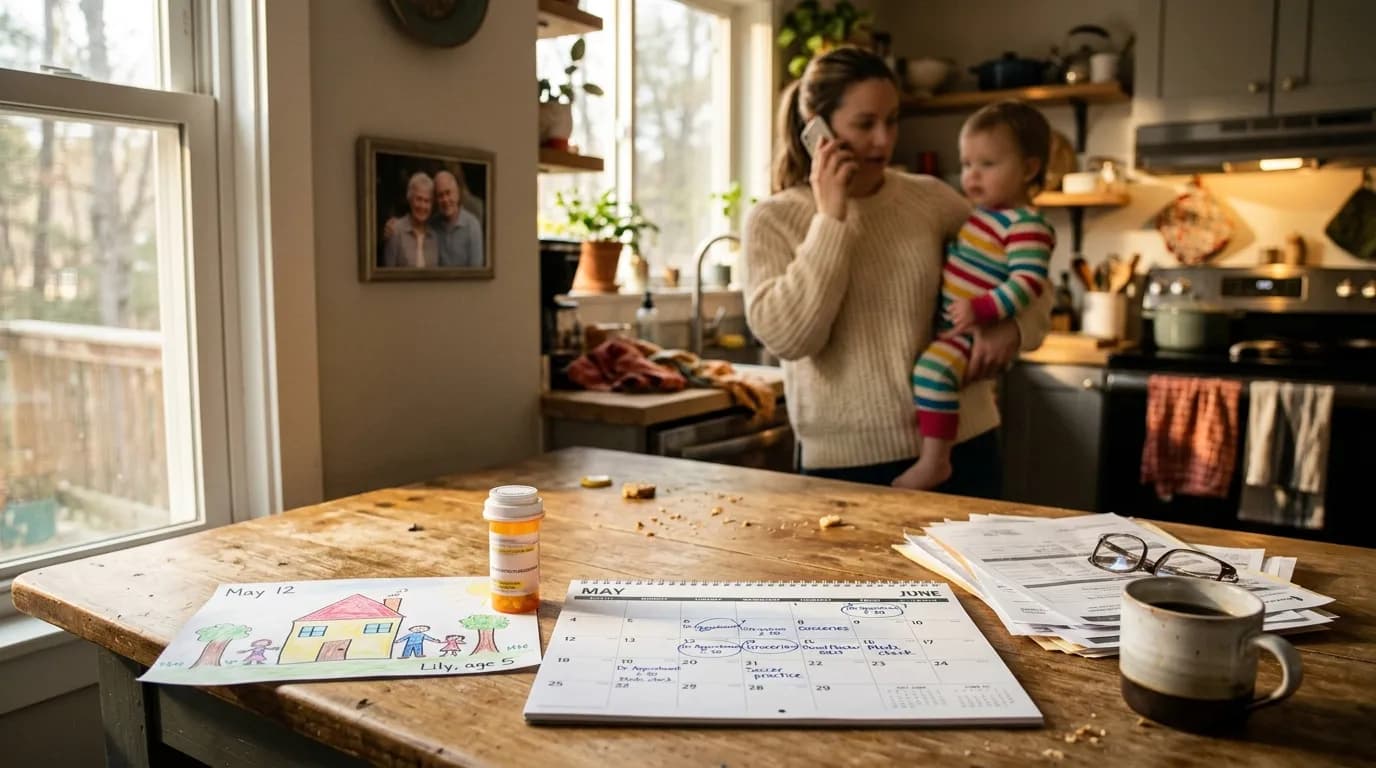
It was 11 p.m. when the power went out. No storm warning, just a transformer somewhere giving up. Within twenty minutes, Maria realized she had no idea where her mother's spare insulin was, couldn't find the emergency contact number for the cardiologist, and wasn't sure if the backup batteries in Mom's medical alert device were fresh. Everything she thought she "had handled" was actually just scattered across three different drawers, one email thread, and her own memory.
She got through it. But she swore she'd never be that unprepared again.
Most caregivers do eventually get through it. The crisis hits, the adrenaline kicks in, and somehow things hold together. But "getting through it" is not the same as being prepared — and in elder care, the difference between those two things can be the difference between a bad night and a catastrophic one.
Why Caregivers Skip Emergency Planning
There's a simple reason most caregivers don't have a real emergency plan: they're too busy caregiving. The urgent always crowds out the important. And emergency planning has that sneaky quality of feeling unnecessary right up until it becomes the most necessary thing in your life.
There's also an emotional barrier. Sitting down to plan for emergencies means sitting down to imagine them — the fall, the hospitalization, the power outage, the evacuation. For caregivers who are already emotionally maxed out, that's one more thing that feels impossible to face.
But here's what the research consistently shows: caregivers who have a written plan experience significantly less stress during crises. Not because the crisis is less serious — but because they're not having to make decisions and search for information at the same time.
What an Emergency Plan Actually Includes
A real caregiver emergency plan isn't a stack of paperwork. It's a living document you can grab, send, or hand to anyone — a neighbor, a sibling, an EMT — and trust that it tells them what they need to know.
At minimum, it should cover:
Medical essentials. Current medications with dosages and timing. Primary care physician, specialists, pharmacy — all with phone numbers. Allergies. Recent diagnoses. Insurance information. Advance directives (where are they? Who has them?).
Emergency contacts. Not just one person — a chain. Who gets called first? Who's the backup? Who has a key to the house? Who is legally authorized to make medical decisions?
Daily care needs. If a paid caregiver or family member who normally handles things is suddenly unavailable, what does a substitute need to know? Morning routine, fall risk, dietary restrictions, mobility aids, communication preferences.
Supplies and logistics. Location of spare medications. Battery backup status for any medical devices. What to do if the person needs to be evacuated. Any specific needs during power outages (medical equipment that requires electricity is a critical category here).
Financial access. Who can pay bills if the primary caregiver is incapacitated? Where are the accounts? Is there a secondary authorized user?
The "Two-Envelope" Approach
One way to think about this: imagine you had to hand a stranger two envelopes. The first gets them through the next 24 hours. The second gets them through the next week.
Envelope one: name, emergency contacts, medication list, insurance card, advance directive location. Everything a paramedic or ER staff member would need.
Envelope two: care routines, doctor contacts, financial access, where things are kept, who else is involved in care and how to reach them.
If you can put both of those envelopes together — physically or digitally — you've built an emergency plan that actually works.
Don't Wait for the 11 p.m. Moment
Emergency preparedness isn't a one-time task. It needs to be reviewed whenever medications change, whenever a new diagnosis arrives, whenever there's a care transition. Keep the document somewhere accessible — not just on one person's phone. Consider a secure shared folder that trusted family members can reach from anywhere.
Some caregivers find that digital tools designed for care coordination make this dramatically easier — a single place to store medications, contacts, insurance documents, and care notes that can be pulled up on any device, shared with the ER nurse, or handed off to a sibling flying in for a crisis.
The goal isn't perfection. The goal is not being Maria at 11 p.m., trying to remember where things are while your hands are shaking.
Make the plan before you need it. Because the moment you need it, you won't have time to make it.
Managing care for an aging parent?
TendTo helps families coordinate medications, bills, appointments, and documents in one shared dashboard.
Start Free