The Sandwich Generation Now Starts at 34
For decades, the "sandwich generation" — people simultaneously raising kids and caring for aging parents — meant people in their late 40s and 50s. A new 2026 report just moved that number down by more than a decade: the average person now takes on both roles at 34. If you're in your early thirties juggling a toddler's bedtime and your dad's cardiologist appointment, you're not an outlier anymore. You're the new normal.
Why the Timeline Collapsed
Two demographic trends crashed into each other. First, people are having children later — many now start families in their early-to-mid thirties instead of their twenties. Second, the parents of those thirty-somethings are living longer with more chronic conditions than previous generations, meaning they need real hands-on support earlier and for a longer stretch. The math simply overlapped in a way it didn't for prior generations: your kids are still small at exactly the moment your parents start needing you.
There's a third piece too — rising cost of living has pushed adult children to live closer to (or with) their parents, and delayed the point at which they're financially independent enough to hire outside help. Proximity plus limited budgets means more hands-on family caregiving happening at a younger age than the system, or the culture, has caught up to.
The Part Nobody Warns You About
Being sandwiched at 34 is different from being sandwiched at 50 in ways that matter. At 50, you're often more established in your career, have more savings, and — bluntly — more practice navigating bureaucracy and medical systems. At 34, you may still be early in your career, still paying off student loans, still new to parenting itself, and now also learning to navigate Medicare, home health aides, and power-of-attorney paperwork for the first time — all while sleep-deprived from a toddler, not a settled empty-nest household.
It also hits differently socially. Most caregiver support groups, articles, and resources are still written with an assumption that the reader is in their late 40s or older. A 34-year-old googling "how do I get my dad a home aide" often finds themselves in spaces that don't reflect their life stage at all — no mention of daycare pickup conflicts, no acknowledgment that they're also up at 2am with a baby, not just an ailing parent.
The Double Duty, Multiplied
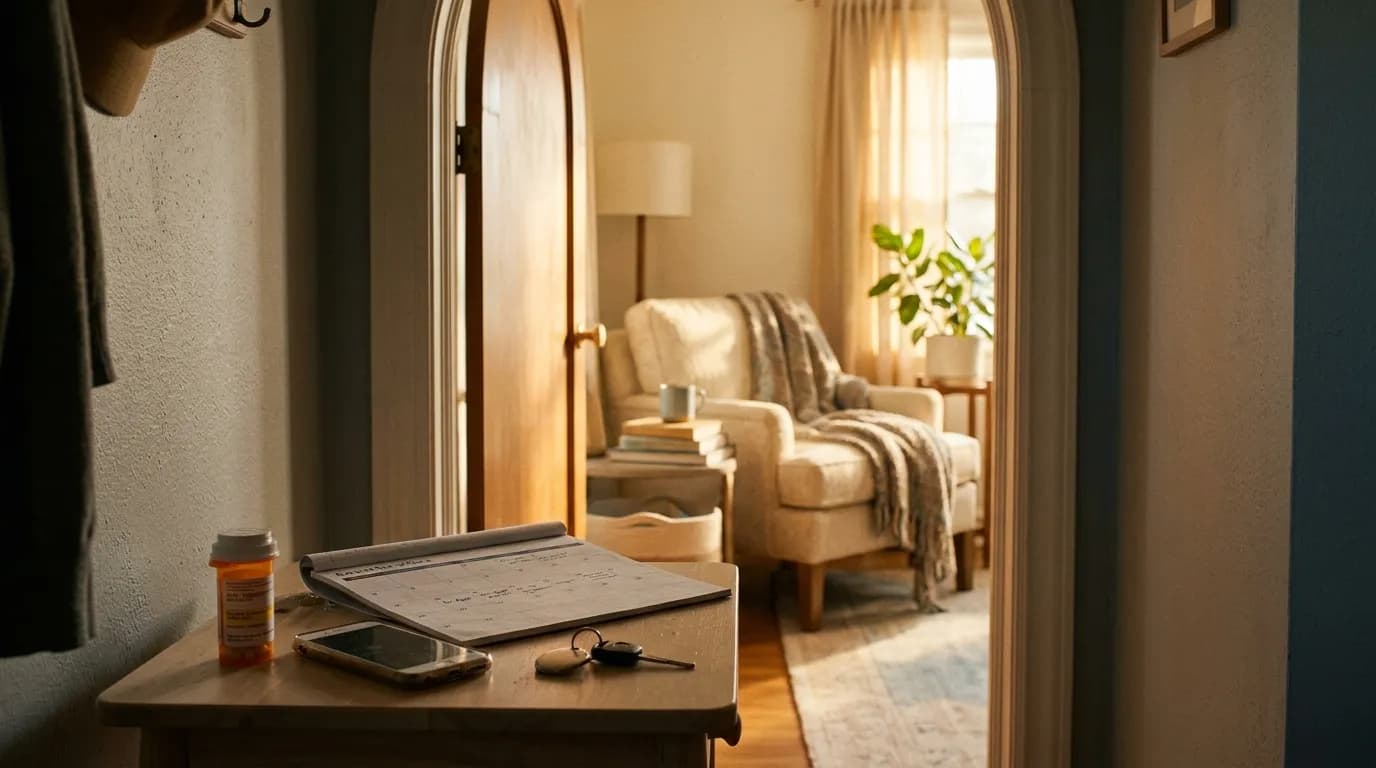
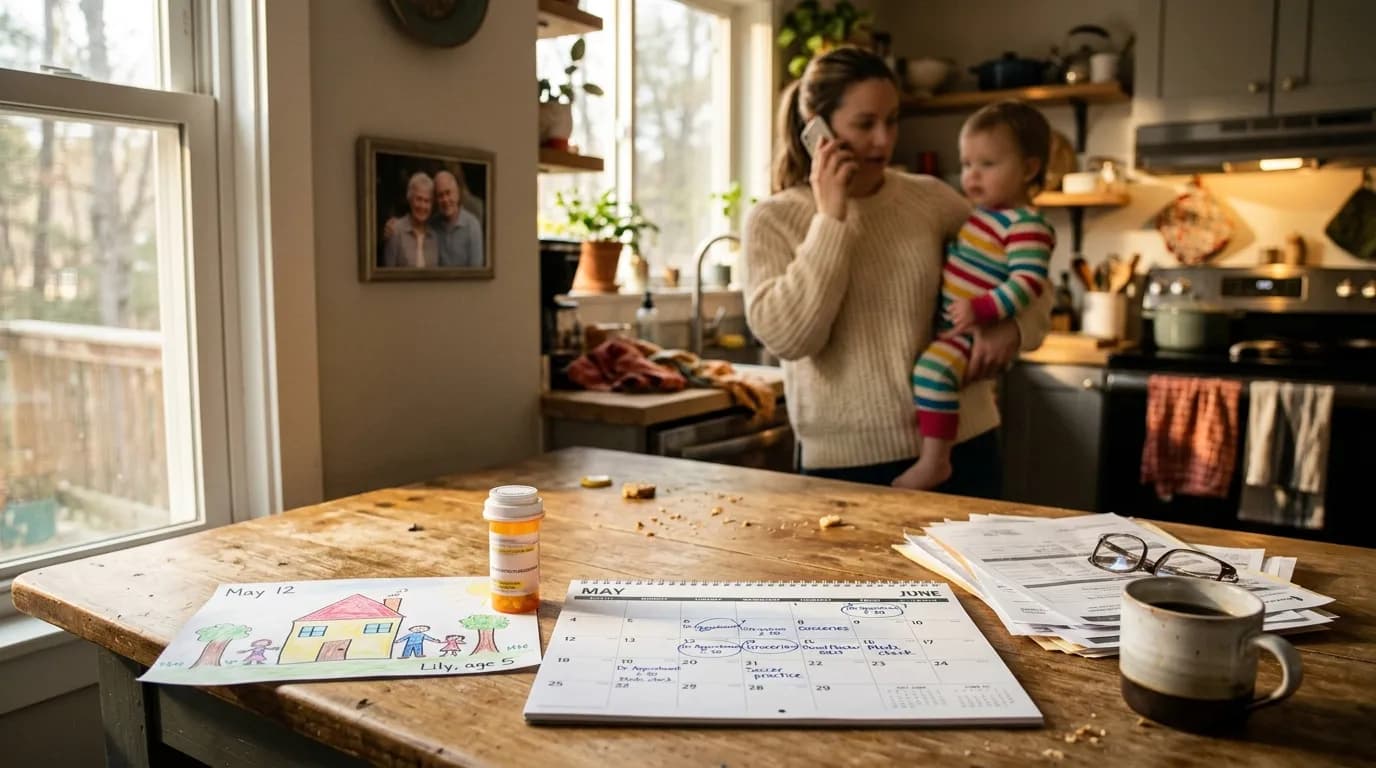
The logistics alone are staggering. You might be tracking two entirely different sets of medical appointments, two different sets of medications, two different emergency contact lists — one for a person who can't yet talk, and one for a person who used to take care of you. Coordination that used to be split across two life stages (raising kids in your 20s-30s, then caregiving in your 50s-60s) now has to happen in the same calendar, often the same week.
What Actually Helps
The caregivers navigating this well tend to do one thing early: they stop trying to keep it all in their head or across five different apps and notebooks, and instead build one central, shareable system — a place where a spouse, sibling, or hired helper can see the same medication schedule, the same appointment calendar, and the same emergency contacts without a 20-minute briefing every time. When you're managing two generations of dependents at once, the thing that breaks first isn't your love or your effort — it's your working memory. Systems that offload that memory, even simple shared documents, buy back hours you desperately need for sleep.
It also helps to actively seek out other caregivers your own age. You are not the only 34-year-old doing this — you're just less visible in a conversation still centered on Baby Boomers caring for the Greatest Generation. Finding even one peer in the same boat can cut the isolation dramatically.
The Takeaway
If you're sandwiched younger than you expected, you're part of a real, measurable, and growing shift — not a personal scheduling failure. The tools and support built for a 55-year-old caregiver weren't designed with your toddler's nap schedule in mind, so don't be afraid to build your own version: one shared system, one source of truth, one place that holds it all so your brain doesn't have to.
Managing care for an aging parent?
TendTo helps families coordinate medications, bills, appointments, and documents in one shared dashboard.
Start Free