Who Am I Now?
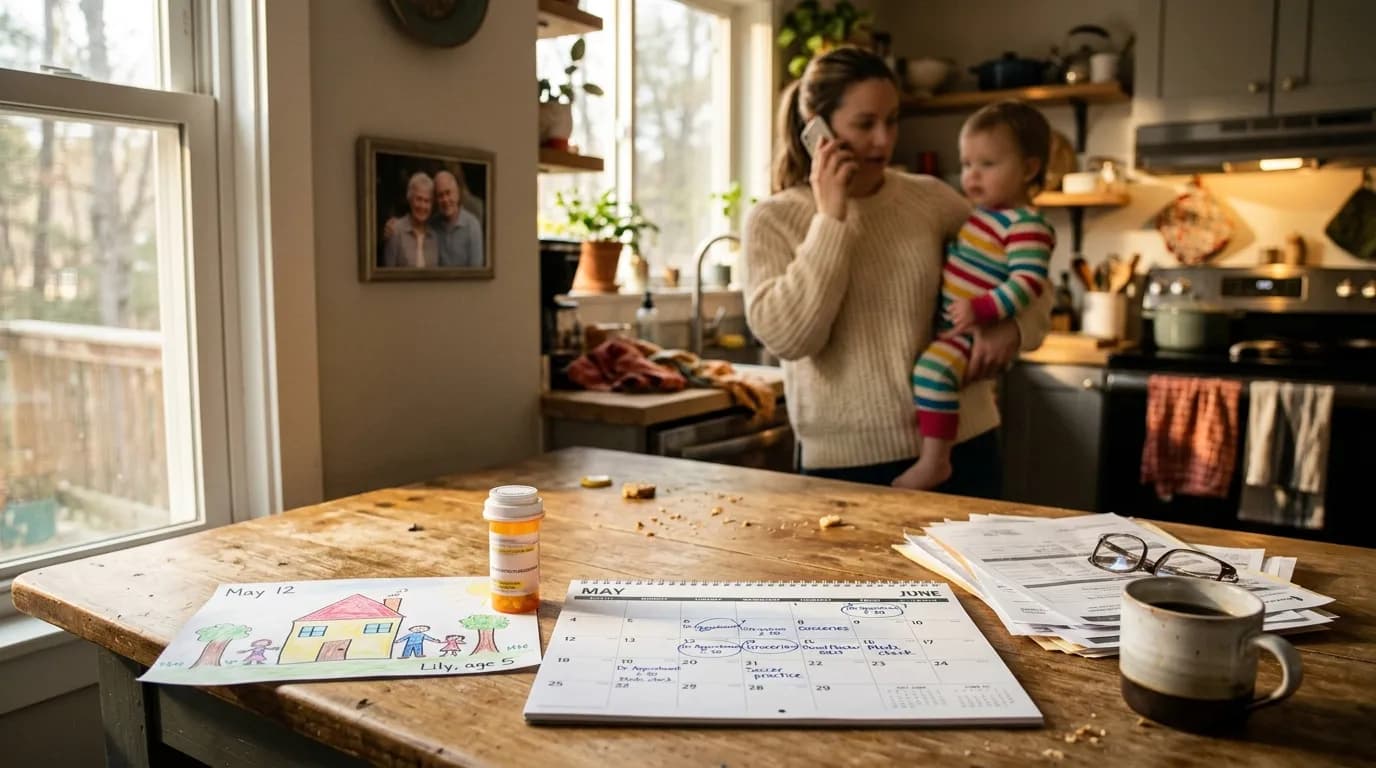
You used to paint. You used to have opinions about restaurants. You used to call your friends back. Now you schedule medications, argue with insurance companies, and fall asleep on the couch at 8:30 PM. Somewhere along the way, "caregiver" stopped being something you do and became the only thing you are.
If that sounds familiar, you're experiencing what researchers call role engulfment — and it's one of the most common, least discussed costs of caregiving.
The Slow Disappearing Act
Nobody loses themselves overnight. It happens in small surrenders. You skip book club once because Dad had a bad night. Then again. Then you stop being invited. You cancel the gym membership because who has time. You decline the work trip because who would cover the evening routine.
Each individual sacrifice makes sense. Added together, they erase you.
One caregiver described it this way: "I wasn't my personality anymore. I didn't do things I liked. Food lost its appeal. I became quieter." That's not depression — or not just depression. It's the lived experience of having every ounce of bandwidth consumed by someone else's needs.
The Guilt Trap
Here's what makes identity loss so insidious for caregivers: the moment you notice it, guilt rushes in. Your parent is sick. Your spouse is declining. And you're upset about missing yoga class? It feels selfish. It feels small.
It's neither.
Losing your sense of self isn't a vanity problem. It's a structural one. A caregiver without an identity outside caregiving is a caregiver heading for collapse. You need something — anything — that reminds you that you exist as a person, not just as a function.
The Identity Discrepancy
Psychologists use the term identity discrepancy burden to describe the gap between who you were before caregiving and who you've become. The wider that gap, the greater the emotional toll.
This burden shows up in specific ways:
- Resentment you can't explain — not toward your loved one exactly, but toward the situation
- Numbness — going through the motions without feeling much of anything
- Fantasies of escape — imagining a different life, then feeling guilty about it
- Social withdrawal — not because you don't want connection, but because you don't know how to show up as this version of yourself
If you're nodding along, you're not broken. You're overloaded.
Micro-Reclamations
You probably can't take a two-week vacation. You might not be able to get back to weekly dinners with friends. That's okay. Identity recovery for active caregivers isn't about grand gestures — it's about micro-reclamations.
A micro-reclamation is any small, deliberate act that reconnects you with who you are outside of caregiving:
- Ten minutes with a hobby. Not to be productive. Not to be good at it. Just to remember that you're a person who likes watercolors, or crosswords, or terrible reality TV.
- One phone call a week. Not about caregiving. About anything else. The weather. A movie. Gossip. Normalcy.
- A physical anchor. A walk around the block. A stretch routine. Something that puts you back in your body instead of your to-do list.
- A sentence that starts with "I want." Practice saying it. Not "Mom needs" or "the doctor said" — what do you want? Even if the answer is just a hot bath and silence.
When Caregiving Ends
There's another identity crisis waiting on the other side — one that catches people completely off guard. When caregiving ends, whether through a loved one's passing or a transition to professional care, many caregivers discover that the role they resented was also the role that gave their life structure and purpose.
The sudden absence of that purpose can feel like free-falling. People describe the first weeks after caregiving ends as disorienting, empty, even purposeless — despite having desperately wanted rest.
If you're approaching that transition, know that it's normal to grieve the role even as you grieve the person. And give yourself the same patience you gave your loved one: recovery takes time.
Start Before You're Ready
You don't need to "find yourself" in some dramatic way. You just need to keep a thread — however thin — connected to the person you were before this started. Maintain it now, even when it feels pointless, because that thread is what you'll pull on when it's time to come back.
Having your caregiving responsibilities organized and manageable — consolidated information, tracked schedules, shared access with family members — isn't just about better care. It's about buying back enough mental space to remember that you're still in there.
You are more than this role. Even on the days it doesn't feel that way.
Managing care for an aging parent?
TendTo helps families coordinate medications, bills, appointments, and documents in one shared dashboard.
Start Free